Tribal Decorative Divider. Ethnic Arrows
First Impressions: Bold, Balanced, and Ready for Real Fabric
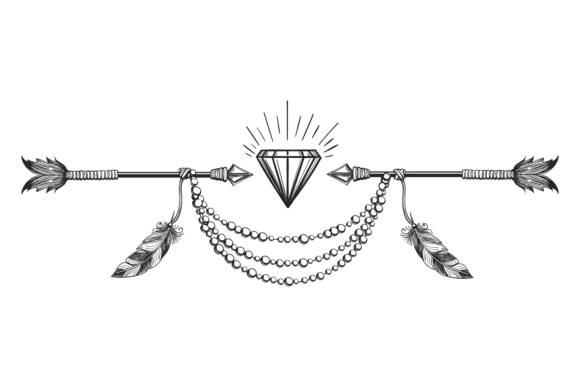
When I opened Tribal Decorative Divider. Ethnic Arrows, I didn’t see just another vector graphic—I saw a rhythm. The arrows flow with intentional asymmetry, each one echoing tribal motifs without leaning into cliché. There’s weight in the lines, but also air—no overcrowding, no fussy detailing that would vanish under thread. It feels grounded, earthy, and quietly confident. That matters. Because in embroidery, mood isn’t decorative—it’s functional. A design this balanced naturally suggests itself for borders, sleeve accents, hem bands, or centerpieces on aprons and tote bags—not as a focal point shouting for attention, but as a subtle signature of craft.
A Real Project Test: Embroidering a Linen Kitchen Towel
Last week, I stitched Tribal Decorative Divider. Ethnic Arrows onto a heavyweight natural linen tea towel for a local boutique launch. Why this design? Because it held up across three critical real-world tests: stitch clarity at 3.5" width, visual cohesion on textured fabric, and customer response during in-store preview. The arrows read cleanly—even where the linen’s slubs interrupted thread laydown—because the design relies on strong silhouettes and consistent line weight, not delicate filigree. Customers paused, traced the shape with their fingers, and asked, “Is that hand-drawn?” That’s the handmade illusion working: confident, intentional, human-made—not digital-perfect.
Where It Shines (and Where to Pause)
Tribal Decorative Divider. Ethnic Arrows thrives in projects where rhythm and repetition matter:
- Custom apparel: Works beautifully on sweatshirt cuffs, t-shirt hems, or cap brims—especially when mirrored or repeated as a band.
- Handmade home goods: Linen pillow covers, cotton aprons, and kitchen towels gain instant character without overwhelming the item’s function.
- Baby and nursery items: On organic cotton onesies or muslin swaddles, it reads as warm and meaningful—not aggressive—when stitched in soft ecru or charcoal thread.
- Embroidered patches: Its clean isolation makes it ideal for iron-on or sew-on patches; no clipping or trimming needed around edges.
- Holiday and wedding gifts: Stitched on cotton napkins or linen sachets, it adds cultural resonance without literal symbolism—making it inclusive and timeless.
But—and this is where experience kicks in—don’t force it where physics fights back:
- Avoid tiny hoops: Below 3", arrow tips risk blurring or stitching inconsistently. Test first on scrap at your target size.
- Watch stretchy fabrics: On knits like jersey or lightweight french terry, stabilizer choice is non-negotiable—use cutaway + tear-away combo to lock down those directional lines.
- Dark or heavily textured backgrounds: The design’s strength lies in contrast. On black denim or bouclé wool, confirm thread color lifts clearly—test satin stitch density to avoid sinking.
- Curved surfaces (like caps): The linear flow adapts well, but mirror or rotate slightly to follow the curve—not just slap it on center front.
What It Adds to Your Finished Product—Beyond Looks
Tribal Decorative Divider. Ethnic Arrows doesn’t just fill space—it elevates perception. On an Etsy listing, it signals intentionality: this isn’t mass-printed; it’s curated detail. For a small shop owner, it becomes part of brand voice—earthy, respectful, uncluttered. For a craft fair shopper, it reads as “made with care,” especially when paired with natural fibers and thoughtful thread choices. And crucially, it scales: use it once on a baby blanket border, repeat it five times on a boutique apron set, or flip and layer it for a modern take on symmetry—all without losing authenticity.
Practical Designer Notes You’ll Actually Use
Before you load Tribal Decorative Divider. Ethnic Arrows into your embroidery machine or add it to your digital product shop:
- Test on scrap fabric first—same weight, same weave, same stabilizer stack you’ll use on the final piece.
- Check thread color contrast on both light and dark mockups. This design lives in its silhouette—make sure it pops.
- Review stitch density in your embroidery software. Too dense? Arrow points may puff or distort on soft fabrics. Too sparse? It loses presence.
- Confirm hoop size compatibility. At full scale, does it fit comfortably within your most-used hoop—or will you need to resize?
- Inspect small details at 200% zoom: are arrow tips sharp? Are inner angles clean? If using for applique design, verify seam allowances.
- Test black-and-white mockups—many buyers browse in grayscale thumbnails. Does it retain identity?
- Use proper stabilizer for your fabric type. Even simple designs misbehave without support.
- Verify licensing before selling finished embroidered items or reselling the digital embroidery file. Tribal Decorative Divider. Ethnic Arrows is listed as a Graphics asset in Crafts—confirm commercial use rights directly with the source.
Final Thought: A Design That Respects the Maker
Tribal Decorative Divider. Ethnic Arrows doesn’t ask for special treatment. It doesn’t demand premium thread or rare stabilizers. It asks only for attention—to fabric choice, to thread tone, to placement. That’s rare. In a market flooded with overworked, overly complex machine embroidery designs, this one breathes. It gives space for the handmade product to speak, for the personalized gift to feel considered, for the small shop product to stand out—not by shouting, but by standing still, steady, and sure. Whether you’re stitching for joy, clients, or commerce, it’s a quiet tool that earns its place in your design assets.